


In short
Most boarding-school aid is need-based and decided by each school from the financial information a family submits. Aid for international students exists at some schools, is usually limited, and is reviewed every year. Read every offer for what it covers, what conditions apply, and what happens in later years.
Most financial aid at U.S. boarding schools is need-based: a school looks at the financial information a family submits, decides what the family can pay, and covers some or all of the difference from its own funds. Aid for international students exists at some schools. It is usually more limited than aid for domestic students, and it is reviewed every year.
The words around aid can make it sound more complicated than it is. Scholarship, award, merit, need-blind, full pay: each one means something specific, and the same word can mean different things at different schools. Knowing the vocabulary makes every conversation with a school, and every offer letter, easier to read.
01 / TWO KINDS OF AID
Need-Based Aid and Merit Aid
Almost every reduction in what a family pays at a boarding school falls into one of two kinds.
This has a name: need-based aid. Aid a school awards because a family cannot pay the full cost, based on the financial information the family submits. Most boarding-school aid is this kind. The school calculates what it calls the family’s demonstrated need: the difference between the cost of attending and what the school believes the family can contribute.
Merit aid is a reduction a school offers for what a student brings: an academic record, a talent, athletics, or a profile the school wants to add. Many boarding schools offer little or no merit aid. Some offer a few named awards. Policies differ widely, so ask each school directly.
Scholarship is the word families use most and the one that tells you least. A school may call need-based aid a scholarship, or call a merit award a scholarship, or use the word for a fund named after a donor. The label matters less than the terms written in the offer.
Athletic scholarships, in the sense families know from U.S. universities, are a college idea. At boarding schools, a coach’s interest can support an application, and aid is usually decided by the financial aid office on the same basis as for any other student.
| Term | What it means |
|---|---|
| Need-based aid | Aid based on what the family can pay, calculated from submitted financial information |
| Demonstrated need | The gap between the cost of attending and the family’s calculated contribution |
| Merit aid | A reduction based on what the student brings; offered by some schools, not all |
| Scholarship | A name for aid; check whether it is need-based, merit-based or both |
| Grant | Aid that is not repaid. Most boarding-school aid is a grant |
| Loan | Money that is repaid. Rare as part of a boarding school’s own aid |
02 / HOW SCHOOLS DECIDE
Need-Blind, Need-Aware and Full Need
Two separate questions decide how aid affects an application: whether the school considers a family’s ability to pay when it decides admission, and whether it covers all of the need it calculates.
This has a name: need-blind. A need-blind school decides admission without considering whether a family has applied for aid. A small number of U.S. boarding schools describe themselves as need-blind. A school can be need-blind for domestic applicants and not for international applicants, so read the policy carefully or ask.
Need-aware (sometimes called need-sensitive) means the school may consider a family’s request for aid when it decides admission, usually because its aid budget is limited. Most boarding schools are need-aware, especially for international applicants.
Meets full demonstrated need means that once a student is admitted, the school covers all of the need it has calculated. This is a separate promise from need-blind. A school can do one, both or neither. Some schools that meet full need for admitted international students say that their aid for international students is limited, which usually means fewer international students who need aid are admitted.
What this means for an international family: applying for aid can affect admission at many schools. That is not a reason to avoid applying if your family needs aid. It is a reason to know each school’s policy before you decide, and to build a list that includes schools where your family’s plan works either way.

03 / APPLYING FOR AID
What Schools Ask Families to Submit
Many U.S. boarding schools use a shared online application for financial aid called Clarity. A family fills it out once and sends it to each school that uses it. Some schools use their own form instead, or as well.
International families are usually asked for:
- The aid application, completed in U.S. dollars where the form asks for it
- Official evidence of income, such as tax returns or wage statements from your country
- Evidence of assets, such as bank statements
- Any further documents the school requests after reviewing the application
Ask each school whether documents must be translated, and whether it needs anything beyond the shared application.
Timing. At many schools, the aid application is due with the admission application, often in mid-January. Decisions on admission and aid usually arrive together in March, and families have a few weeks to accept. Check each school’s dates.
Fees. The aid application has its own fee. Fee waivers exist for families who need them; ask the school or the application service.
04 / THE OFFER
Reading an Aid Award
An admitted student who applied for aid receives an award letter, or a section of the admission letter, setting out what the school will contribute. Some letters use short codes. “FP,” for example, usually means full pay: the family is expected to pay the full published tuition.
This has a name: a tuition arrangement. The full set of terms behind what a family pays: the published tuition, any reduction, what it covers, the conditions attached, and whether it continues in later years. An award letter is one part of it. The enrollment contract, the payment schedule and the renewal rules are the rest.
Before accepting any offer, ask:
- Is this need-based aid, merit aid or another kind of reduction?
- What does it cover: tuition only, or room, board and fees as well?
- What is left for our family to pay this year, including the costs beyond tuition?
- What conditions apply: grades, conduct, participation in a sport or program?
- Will it continue next year, and on what basis?
Ask for the answers in writing. A multi-year decision deserves terms on paper.
05 / YEAR OVER YEAR
What Can Change After the First Year
Families often plan around the first year’s number. Several things can change it.
- Aid is reviewed every year. Most schools ask families to submit a new aid application each year. If the family’s finances stay the same, many schools keep the aid at a similar level; if they change, the aid can change.
- Tuition usually rises each year. A fixed amount of aid covers a smaller share of a higher tuition. Ask whether the aid is set as an amount or as a share of tuition.
- Conditions apply each year. If an award depends on grades, conduct or participation, it can end if those conditions are not met.
- Family circumstances count. A sibling starting school or university, a change in income, or a move can change the calculation.
- Currency moves. Tuition is charged in U.S. dollars. A change in exchange rates changes what the same bill costs a family abroad.

06 / LOANS AND PAYMENT
Can International Families Borrow for Boarding School?
U.S. federal student aid does not apply. Under U.S. federal law, federal student loans and grants are for students at colleges and universities, not elementary or secondary schools, and they are limited to U.S. citizens, permanent residents and certain other eligible noncitizens.
Private loans are limited. Some U.S. lenders offer loans for private school tuition, usually to U.S. families with U.S. credit history. Lenders that specialize in international students generally lend for university study. Families abroad who borrow usually do so through a bank in their own country.
Payment plans are common. Many schools let families spread tuition across several payments during the year through a payment plan, often run by a tuition management service. Ask each school what plans it offers and whether there is a fee.
07 / THE COMMITMENT
Enrollment Contracts, Deposits and Refund Insurance
This has a name: an enrollment contract. The agreement a family signs to accept a place. It usually commits the family to the full year’s tuition, whether or not the student stays the whole year, and comes with an enrollment deposit that is usually not refundable.
Tuition refund insurance is an optional policy many schools offer. It returns part of the year’s tuition if a student withdraws for medical reasons, and some plans also cover other withdrawals or dismissal. It usually has to be purchased before the school year begins. Read what it covers, and what share it returns, before deciding.
International student fees. Some schools charge international students an additional fee, which may cover health insurance, visa paperwork or support services. Ask whether one applies and what it includes.
QUICK REFERENCE
The Terms in One Place
| Term | Short definition |
|---|---|
| Published tuition | The price a school lists for the year, before any aid |
| Financial aid | Any reduction in what a family pays, awarded by the school |
| Need-based aid | Aid based on what the family can pay |
| Merit aid | Aid based on what the student brings |
| Scholarship | A name for aid; check what kind |
| Grant | Aid that is not repaid |
| Demonstrated need | The gap between cost and the family’s calculated contribution |
| Need-blind | Admission decided without regard to an aid request |
| Need-aware | Admission may consider an aid request |
| Meets full need | The school covers all calculated need for admitted students |
| Full pay (FP) | The family pays the full published tuition |
| Award letter | The school’s written statement of the aid offered |
| Tuition arrangement | The full set of terms behind what a family pays |
| Enrollment contract | The agreement that commits a family to the year |
| Enrollment deposit | The payment that holds a place; usually not refundable |
| Tuition refund insurance | Optional cover that returns part of tuition after certain withdrawals |
THE GESP PERSPECTIVE
The Same Words, School by School
Every school on a family’s list uses these terms in its own way. One is need-blind for domestic families and need-aware for international ones. Another offers no merit aid and generous need-based aid. A third has been open to different kinds of arrangements in past years than its website suggests.
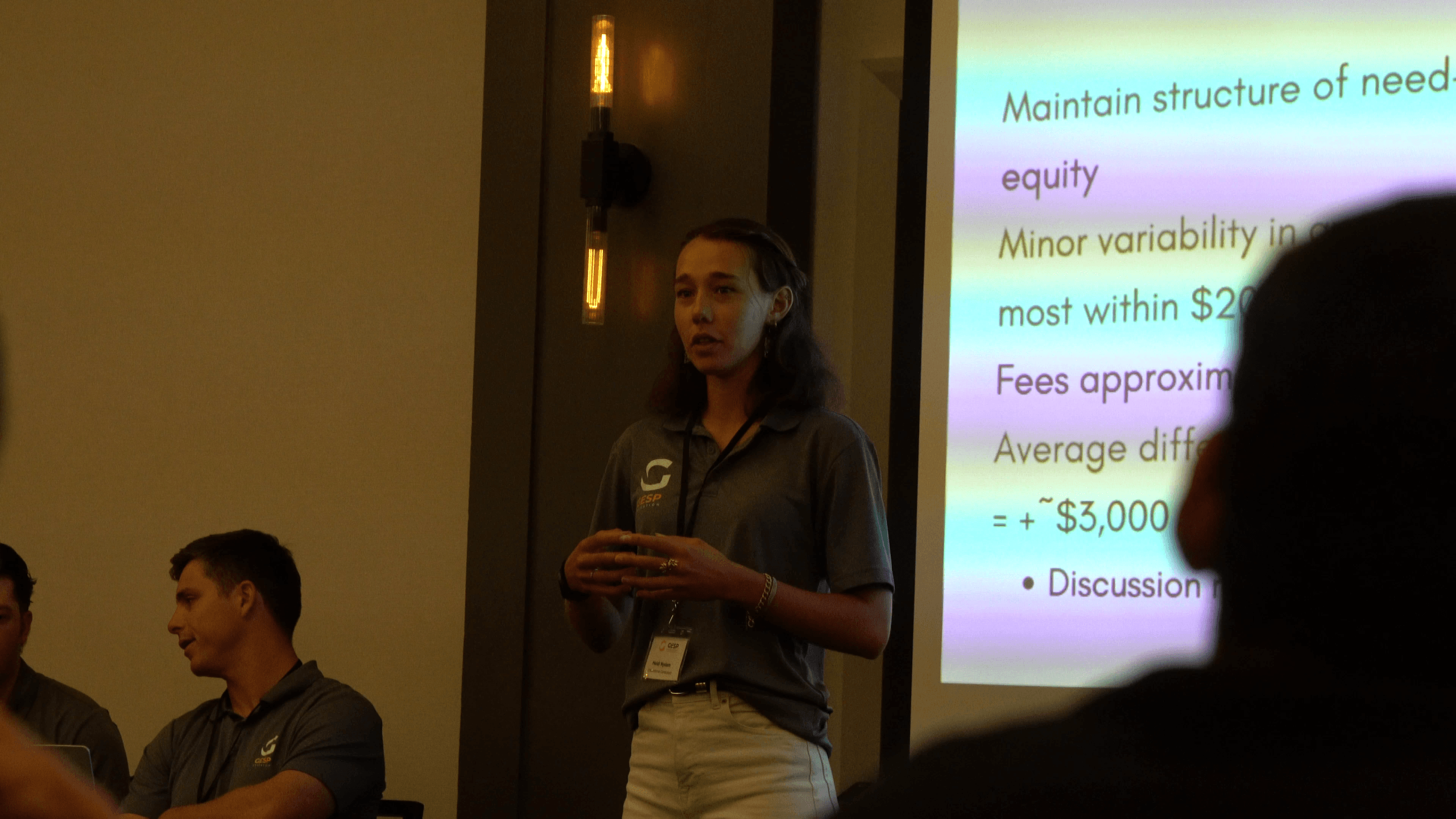
A GESP consultant can explain each of these in detail for the schools your family is considering: how each school treats aid for international students, what its offers have included in the past, and which schools have historically been open to one kind of arrangement or another. Schools make every aid decision themselves, and no past offer guarantees a future one. What changes is that your family knows what to ask each school, and what a reasonable answer looks like, before the letters arrive.
Continue reading
- How to Choose the Right U.S. Boarding School for Your Child. Why budget belongs in the search from the beginning.
- How Much Does Boarding School Cost in the U.S.? A worked example of how aid can bring a $65,000 school within a $30,000 budget.
Frequently asked questions
Yes, at some schools. Most boarding-school aid is need-based, and many schools set aside a limited amount for international students. Policies differ by school, so ask each school how it treats international applicants who apply for aid.
A need-blind school decides admission without considering whether a family has applied for financial aid. Few boarding schools are need-blind, and some that are need-blind for domestic applicants are not for international applicants.
Often not. Schools use “scholarship” for need-based aid, merit awards and named funds. Read the offer for what kind of aid it is, what it covers and whether it continues.
At most schools, yes. Families submit a new aid application each year, and the aid can change if the family’s finances, the tuition or the conditions of the award change.
U.S. federal student loans are only for college and university students who are U.S. citizens, permanent residents or certain other eligible noncitizens. Private lenders for international students generally lend for university. Families abroad who borrow usually do so through a bank in their own country, and many schools offer payment plans.
It usually means full pay: the family is expected to pay the full published tuition.
Terms in this article
Considering U.S. boarding school?
If your family is beginning the process and would like help understanding which schools may be appropriate for your child, talk with a GESP consultant.
Talk with a GESP consultantNo Dream Is Too Big.