


In short
Start with your child, not the school list. The right school is the one where your child can realistically be admitted and realistically thrive, and that depends on how academics, English, campus life, participation and cost fit together for them.
The best-known school isn’t always the best school for your child. The right search begins with understanding where your child is most likely to thrive.
Today, a family can build a school list in a weekend. You can search school websites, watch campus videos, compare tuition, ask other parents for recommendations, and use AI to summarize admissions requirements. A student can have strong grades and a polished highlight video before anyone has asked whether the path actually fits.
It’s natural to start with rankings, reputation, location, or the schools you’ve heard about before. But we believe the better question is:
Where is your child most likely to thrive?
There are hundreds of boarding schools across the United States, and they are far from interchangeable. Academic environments, school culture, athletics, arts, residential life, student support, location, size, and expectations can vary enormously. A school that is an outstanding fit for one student can be completely wrong for another. Choosing well starts with understanding the student first.
01 / START WITH THE STUDENT
Start With the Student, Not the School List
Before building a list of schools, think about the person who will actually be living there. How does your child learn best? What motivates them? When do they feel confident? Do they thrive in highly competitive environments or prefer something more collaborative? Would they feel comfortable on a large campus or more at home in a smaller community?
And just as importantly: What does your child want from this experience?

The objective isn’t simply to find a good school.
It’s to find a good school for your child.
Before you build a list, gather:
- Your child’s age, current grade, country, and the year they hope to start
- Recent academic records, and a sense of how their current school grades
- English test results, if they have taken one
- Athletic history, video, level of competition, and goals, where sport is part of the plan
- Your family’s priorities and financial range
- Any schools, coaches, or advisors you are already in contact with
- Your child’s own reasons for wanting to go
This is useful whether your family searches on its own or with guidance. It makes every later conversation more productive, and it makes gaps easier to see.
02 / ACADEMICS
Look Beyond Academic Reputation
Academics matter, but the strongest school on paper isn’t automatically the strongest environment for a particular student. Look deeper. Consider class size, teaching style, academic expectations, available courses, advising, learning support, technology, and how students actually participate in the classroom.
Ask whether your child will be challenged appropriately, have access to the subjects that interest them, and be known by their teachers. The right academic environment should encourage growth without creating a constant sense of struggle.
For students coming from outside the United States, English deserves its own look. A student can meet a school’s minimum English requirement and still need more confidence before taking part in class discussion, interviews, and life in a dorm. Ask what English and academic support the school actually provides, and how much your child is likely to need it.

03 / LIFE ON CAMPUS
Consider the Entire Student Experience
Boarding school isn’t just where your child will go to class. For boarding students, it becomes home for much of the year. Residential life, friendships, dorm culture, faculty relationships, traditions, meals, activities, and weekends all become part of the education.
When evaluating a school, ask what daily life actually feels like. How do students spend free time? What happens on weekends? How involved are faculty in residential life? Is the environment highly structured or more independent? And what kinds of students seem happiest there?
If your child will be living far from home for the first time, think honestly about their maturity and independence. Some students are ready for a lot of freedom; others do better where adults are closely involved in daily life. Neither is better. It depends on your child.

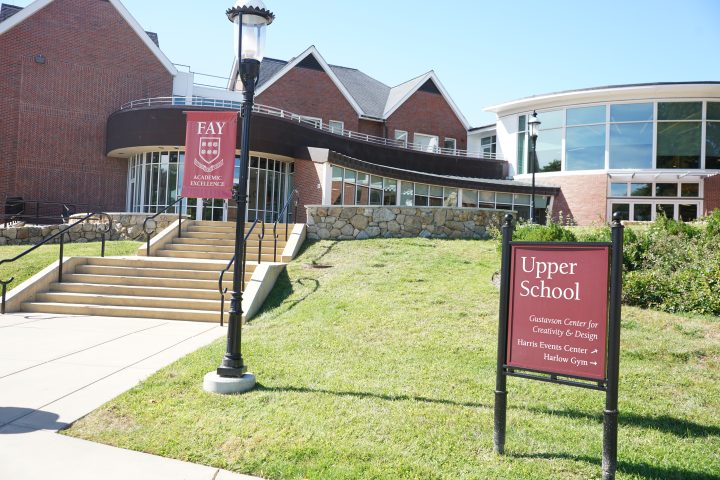
A beautiful campus can make a strong first impression.
The community determines what living there will actually feel like.
04 / PARTICIPATION
Think About Where Your Child Will Participate
For student-athletes, finding the right athletic environment requires more than checking whether a school offers the sport. Ability level, position, coaching, team strength, opportunity for playing time, and the student’s longer-term goals all matter.
Sometimes being an important contributor at one school can be far more valuable than struggling to find playing time at another. The same principle applies to music, theater, art, robotics, leadership, community service, and outdoor programs. Look for opportunities to participate, contribute, develop, and belong.

05 / ADMISSIONS
Be Ambitious — but Realistic — About Admission
A thoughtful boarding-school list can absolutely include ambitious options. But it should also be grounded in reality. Grades, English proficiency, recommendations, testing when applicable, extracurricular involvement, athletic ability, personality, timing, and the particular needs of each school can all influence admission.
The goal should not be to create a list based primarily on famous names or selectivity. It should be to identify several strong environments where your child has both a realistic admissions opportunity and a realistic opportunity to succeed once they arrive.
06 / BUDGET
Include Budget in the Strategy From the Beginning
Boarding school is a significant family decision, and finances should be part of the conversation early. Costs vary by school, and families should understand the expected financial commitment before becoming emotionally invested in a particular option.
Having a realistic financial framework from the beginning allows the search to focus on schools that make sense for the student and the family.

07 / CAMPUS VISITS
Visit When You Can — and Pay Attention to More Than the Buildings
Websites, photographs, videos, and virtual tours are valuable. But they don’t tell you everything. Walking through a campus can reveal things that are difficult to understand online: how students interact, how faculty engage with them, the energy of the community, the surrounding area, and whether your child can actually imagine living there.
Don’t evaluate only the facilities. Pay attention to how the school feels. Sometimes the school a family expects to love doesn’t feel right once they arrive. And sometimes a school they barely knew before visiting immediately feels different. Those reactions matter.
BRINGING IT TOGETHER
These Aren’t Seven Separate Decisions
Each of these factors can look manageable on its own. The difficulty is how they interact.
A coach may be interested in your child at a school whose academic environment isn’t the right one. A school may offer a lower tuition figure while providing less of the support your child needs. A famous name can pull a family away from the school where their child would have done best. A student can meet the English requirement and still not be ready to live and learn in English every day.
Most of the mistakes we see aren’t failures of effort.
They’re failures of sequence.
The answer is to look at these factors together, early, before any one school becomes the one your family has its heart set on.
THE GESP PERSPECTIVE
There Is No Universal “Best” Boarding School
Families often ask which U.S. boarding schools are the best. We think there is a more useful question: Which schools are the best fit for this student?
At GESP, we begin by understanding the student: their academics, interests, personality, athletic goals when relevant, family priorities, and financial circumstances.
Our relationships with U.S. boarding schools are built in person. Admissions directors from schools we work with travel to meet GESP families in their own countries, often before a student has applied. Schools still make their own decisions. What changes is that they have met your child and your family before the application arrives, and that your family can ask better questions earlier. That is how we help families look beyond names and rankings to where a student has a realistic opportunity to thrive.
Because the goal isn’t simply getting into a boarding school.
It’s finding the right one.
Continue reading
- Before You Build a School List, Understand the Decision You Are Making. Why the order in which a family makes these decisions matters as much as the decisions themselves.
- Before You Hire an Educational Consultant, Ask These Questions. What any consultant should be able to explain before you trust them with this decision.
- If athletics is central to your decision: A Highlight Video Can Get a Coach’s Attention. It Cannot Tell You Whether the School Is Right.
Frequently asked questions
Not necessarily. Schools vary enormously in academics, culture, support, athletics and residential life. A school that is an outstanding fit for one student can be the wrong environment for another.
Not always. A student can meet the minimum and still need more confidence before taking part in class discussion, interviews and dorm life. Ask what English and academic support the school actually provides.
From the beginning. Understanding the full financial commitment early keeps the search focused on schools that make sense for your child and your family.
Terms in this article
Considering U.S. boarding school?
If your family is beginning the process and would like help understanding which schools may be appropriate for your child, talk with a GESP consultant.
Talk with a GESP consultantNo Dream Is Too Big.