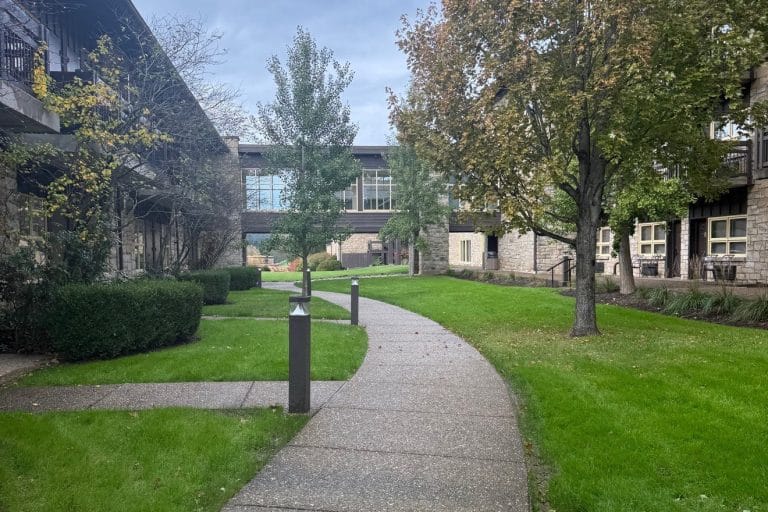


A campus visit shows you the buildings. It does not show you what everyday life there looks like.
Most boarding school campus visits are well run. You see the library, the athletic center, and a dorm room tidied for visitors, and you leave impressed.
Then, a few weeks later, a different question starts to bother you: when my child has a bad Tuesday in November, who notices?
A campus visit can help answer that, but only if you know what to look for. Here are seven things worth paying attention to, and below that, the complete question bank for your visit.
Download the checklists
General Boarding School Checklist
For all families
25–30 essential questions
Printable PDF with space to write notes after every section, so your answers from each school stay in one place.
Student-Athlete Checklist
Additional questions for athletic families
15–20 sport-specific questions
Printable PDF with space to write notes after every section, so your answers from each school stay in one place.
Student-athletes are still boarding school students first. Athletic families download both resources. Families without specialized athletic interests download only the general checklist. The student-athlete checklist is a companion to the general checklist, not a replacement.
Student-athletes are still boarding school students first. Their families need to evaluate academics, residential life, emotional well-being, and overall fit, not just sports. Athletic families download both resources. Families without specialized athletic interests download only the general checklist.
The student-athlete checklist is a companion to the general checklist, not a replacement.
1. What Students Say When They're Not Giving a Tour
Student guides are enthusiastic and proud of their school. They are also representing it.
Pay attention to the other students you meet during your visit. How do they treat one another? Do they seem comfortable approaching teachers? What is the mood in the dining hall?
Ask students directly:
- What do you enjoy most about living here?
- What was harder than you expected when you first arrived?
- What do students usually do on weekends?
Look for: a specific answer, not a slogan. A student who can name what was hard, and what helped, tells you more than a polished tour line.
2. What Happens During School Breaks
Some boarding schools close their dorms during certain breaks. For students whose families live far away, flying home is not always realistic, and staying in the dorm is often not an option.
Ask what the school actually does:
- Which school breaks require students to leave campus?
- What options are available for students who cannot travel home?
- Does the school help arrange accommodations, such as host families, or is that the family's responsibility?
- Are there additional costs?
Look for: a named arrangement, not "we help families figure it out." This is especially important for international families, because it affects travel, cost, and where their child will stay.
3. Who Notices When Something Is Going Wrong
Ask who will know your child best and how that person would recognize when something isn't right.
A student can earn good grades while eating alone every night.
Teachers, advisors, dorm parents, and coaches may notice different things. Ask how they communicate when a student needs additional support.
Then ask about a specific situation: if a new student is struggling to adjust after the first month, what happens? Who gets involved, and when are parents contacted?
Look for: a named person, a regular meeting, and a clear step when a student struggles. A specific process is more useful than a general assurance that students are well supported. What matters is how quickly the school notices, and what it does next.
From the complete guide:
- Who will be my child's advisor, and how often do they meet?
- If a student is struggling to adjust, who gets involved, and when are parents contacted?
- How does the school support a student who is homesick or having trouble making friends?
4. Whether Advanced Students Can Move Up
Some students arrive having already completed advanced coursework, particularly in mathematics and science, and are ready for more challenging classes rather than repeating material they have already mastered.
Ask, for your child's subject and grade:
- How does the school place students who are ahead, through transcripts, assessments, or other evaluations?
- Can students take advanced classes with older students?
- If a student skips a course or moves ahead, how are graduation requirements handled?
Look for: a placement process, not a verbal "we can work that out." Before making a decision, ask the school to confirm how placement would be determined for your child.
5. Where Your Child Will Actually Fit on the Team
A strong player at home can find themselves on the bench. The best player on a team can stop improving if no one pushes them.
Neither situation, on its own, means the school is a poor fit.
Ask coaches how your child's current ability compares with the roster:
- What level of competition does the team currently play?
- How are players evaluated and selected?
- What opportunities might realistically be available for my child to compete and develop?
- What training opportunities are available outside the main competitive season?
Look for: a realistic first-year answer. "Where would my child play, and what would they learn there?" is the question that changes the decision.
6. Whether the School Fits Your Child's Personality
Two students can have similar grades, athletic ability, and goals, and still need very different environments. One may thrive in a large, busy community with a demanding schedule. Another may do better with smaller classes, more personal attention, and a quieter residential life.
Neither is better. The question is which environment is right for your child.
Watch how your child responds during the visit. Do they talk easily with students and teachers? Are they curious about daily routines? Can they picture themselves living there?
Do not expect an immediate answer. Afterward, ask what felt comfortable, what worried them, and whether they could see themselves as part of that community. Their view should shape the decision from the beginning.
From the complete guide:
- How would you describe the student who thrives here, and the student who struggles?
- How large are classes, and how much individual attention do students receive?
- What does weekend life look like, and are students expected to stay on campus?
7. What You Forget Between Campus Visits
After visiting several schools, details can start to blur together. You may remember an impressive athletic facility but forget what you learned about academic support or weekend life.
Before each visit, identify your family's three highest priorities. Afterward, take a few minutes to record what you learned, what your child thought, and any concerns or unanswered questions.
Those notes may reveal differences that weren't obvious during the tours.
From the complete guide:
- What did my child notice, what felt comfortable, and what worried them?
- Against our family's three highest priorities, how did each school compare?
- What is still unconfirmed, and who do we follow up with?
Download the checklists
General Boarding School Checklist
For all families
25–30 essential questions
Printable PDF with space to write notes after every section, so your answers from each school stay in one place.
Student-Athlete Checklist
Additional questions for athletic families
15–20 sport-specific questions
Printable PDF with space to write notes after every section, so your answers from each school stay in one place.