
During long breaks, international boarding students usually go home with a roommate, stay with a host family, stay in a dorm the school keeps open, or meet a parent who flies in. Which of these your child can choose depends on the school. Ask before you enroll, while the answer can still shape the decision.
For a family a short drive away, a break means a trip home. For a family a long flight away, every break on the calendar is a plan someone has to make. Most of those plans are simple once you know what the school offers.
01 / THE CALENDAR
Know Which Days the Campus Closes
A boarding school year has a few kinds of time away. Each school’s calendar shows its own dates; the names are similar across schools.
| Break | What it usually is | The question to ask |
|---|---|---|
| Long weekend | A three- or four-day weekend, a few times a year | Do dorms stay open? |
| Closed weekend | A weekend when dorms close and every student leaves campus | How many are there, and when? |
| Thanksgiving break | Late November, often a week or more | Do dorms stay open, and is there a host-family program? |
| Winter break | Mid-December to early January | Do dorms close completely? |
| Spring break | Usually in March, often one to two weeks | Same as winter |
| Summer | June to late August or September | What summer programs does the school run? |
This has a name: a closed weekend. On a closed weekend, the dorms shut and every boarder needs somewhere to go. Some schools have none; some have several. They are easy to miss on a calendar and important to know about before you enroll.
Some schools also offer five-day boarding, where students go home every weekend. For a family abroad, a seven-day boarding program is usually the one that works.
02 / FOUR ANSWERS
Where Students Go
| Option | How it works | What to ask |
|---|---|---|
| A roommate’s or friend’s family | The most common answer once a student has settled in. Invitations come from classmates who live within driving distance. | What permission does the school need from us? |
| A host family the school arranges | Some schools match international students with faculty or local families for breaks. | Is there a program? Is there a cost? How are families chosen? |
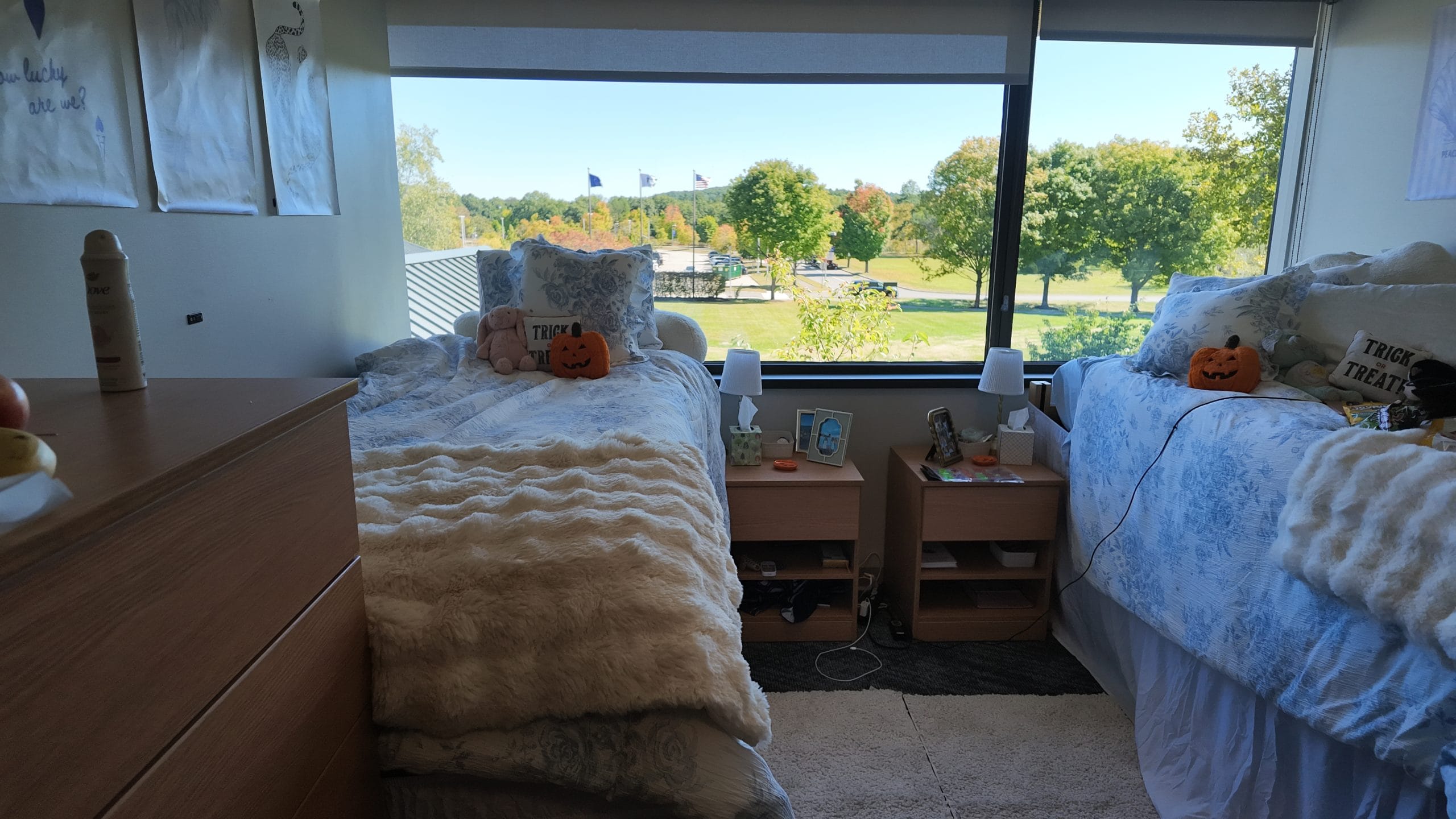
| A dorm that stays open | Some schools keep one dorm open over Thanksgiving or spring break, with meals and supervision. | Which breaks? Is there a fee? Who supervises? |
| A parent who flies in | Some families make the break a week together in the United States. | Can students leave campus with a parent early or return late? |
In the first year, the roommate option may not exist yet. Plan for Thanksgiving before your child arrives, and expect the second year to be easier.
03 / GETTING THERE
Plan the Airport Before the Ticket
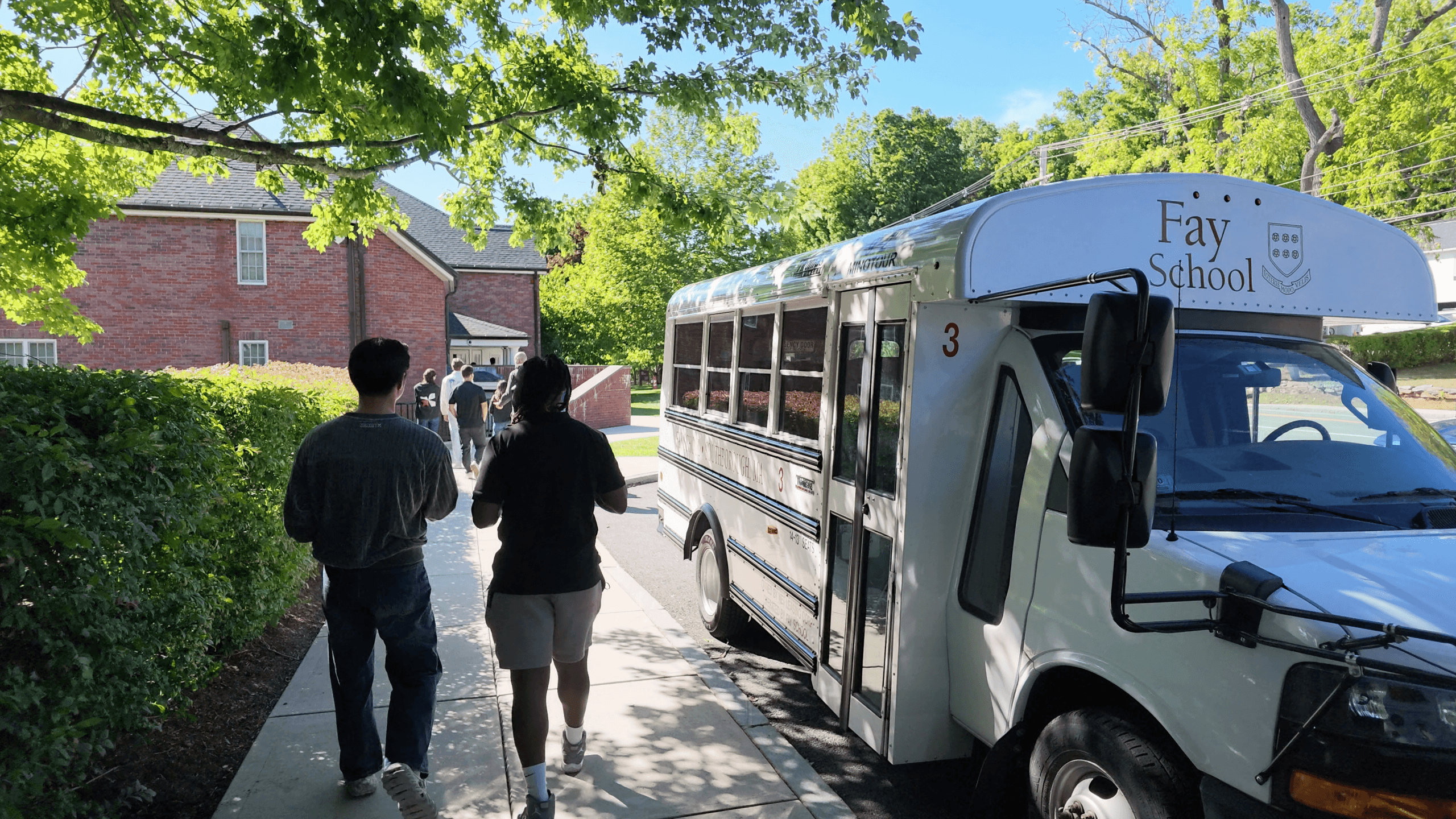
A break starts with getting from campus to an airport. Schools handle this differently.
- Shuttles. Many schools run shuttles to nearby airports at the start and end of breaks, on set days and times. Book flights to match.
- Flying alone. Airlines have their own rules for children flying without an adult, often called an unaccompanied minor service. Rules and fees differ by airline and by your child’s age; see, for example, the pages from United1 and American Airlines2. Check with your airline when you book.
- Holiday flights. Flights around Thanksgiving and the winter holidays fill early and cost more. Book once the school calendar is published.
- Who meets your child. Know who will be at the airport at each end, and make sure the school has that person’s name.
04 / GUARDIAN AND HOST FAMILY
Know Who Is Responsible When Campus Is Closed
This has a name: a guardian. Some schools ask international families to name an adult in the United States who can act for the parents when the school is closed or in an emergency. A guardian is different from a host family. A host family offers a place to stay; a guardian has a formal role the school recognizes.
Requirements vary. Some schools require a guardian, some recommend one, and some arrange breaks so that one is not needed. Ask each school what it expects, and whether it can help a family find someone.
05 / THE FIRST TERM
What the First Thanksgiving Is Like
Thanksgiving arrives about three months after drop-off, around the time homesickness tends to peak and first-term exams finish. For many international students it is the first time campus empties around them.
A few things help:
- A plan made early, so your child knows in October where they will be in November.
- A standing weekly call at a set time, with the time difference worked out. A routine call is easier on both sides than waiting for a difficult day.
- Knowing whom to contact. Every boarder has a faculty advisor and a dorm parent. If your child goes quiet, contact them. Faculty may not notice a quiet student. Most boarders do find such an adult: in a 2024 survey by The Association of Boarding Schools (TABS) and Canadian Accredited Independent Schools (CAIS), boarding students were 88% more likely than day and public school students to say they have one or more trusted adults at school.3 Until your child has one, the advisor is the person to call.
Parents’ Weekend (sometimes called Family Weekend) usually falls in the fall, a few weeks after classes begin. For parents abroad it is often the first chance to see the school in session. If you can only make one trip in the first year, consider this one.
06 / THE SUMMER
Plan the Summer as Part of the Year
Most international students go home for the summer. Others stay for part of it:
- The school’s own summer programs, for English, academics or sport.
- Camps and programs elsewhere in the United States.
- Time with a host or friend’s family.
Dorms close for the summer and most schools have no storage. Families usually ship or store belongings through a box service; ask the school which one students use.
Before any trip out of the United States, ask the school’s international student office what documents your child needs to travel and return on an F-1 student visa. The current rules for F-1 students are on the U.S. government’s Study in the States4 site (as of October 2026).
BEFORE YOU ENROLL
Ask Every School These Questions
- Which weekends and breaks close the dorms?
- Does any dorm stay open over Thanksgiving and spring break, and is there a fee?
- Is there a host-family program for breaks?
- Does the school require or recommend a guardian?
- Which airports do shuttles serve, and on which days?
- What summer programs does the school run?
- Who should we contact if our child seems unhappy?
Ask for the answers in writing, and compare them across the schools on your list. Two schools that look alike on paper can handle breaks very differently.
THE GESP PERSPECTIVE
Part of Choosing the School
Breaks are rarely what a family thinks about first, and they are part of what daily life at a school feels like for a student far from home. GESP collects each partner school’s answers on break housing, host families and airport transport, so families can compare them before the list is final.
Continue reading
- How to Choose the Right U.S. Boarding School for Your Child. Life on campus is one of seven things to weigh together.
In short
Most go home with a roommate, stay with a host family, stay in a dorm the school keeps open, or meet a parent who flies in. Which options exist depends on the school, so ask about every break before you enroll.
Frequently asked questions
Usually with a roommate’s or friend’s family, with a host family the school arranges, in a dorm the school keeps open, or with a parent who flies in. Which options exist depends on the school, so ask before you enroll.
A weekend when the dorms close and every boarding student must leave campus. Some schools have none and some have several each year. International families should ask how many there are and where students usually go.
Some keep one dorm open over Thanksgiving or spring break, sometimes for a fee. Most close completely for winter break and the summer. Each school’s policy is different.
No. A host family offers a place to stay during a break. A guardian is an adult in the United States who can act for the parents when the school is closed or in an emergency. Some schools require one; ask each school.
Sources
Terms in this article
Considering U.S. boarding school?
If your family is beginning the process and would like help understanding which schools may be appropriate for your child, talk with a GESP consultant.
Talk with a GESP consultantNo Dream Is Too Big.