

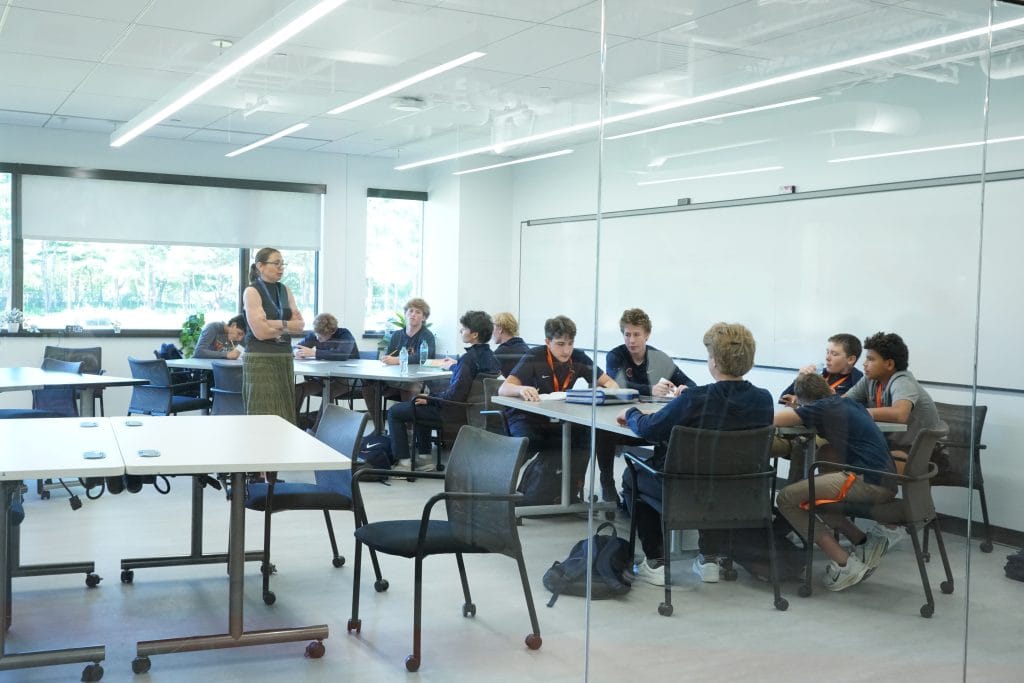
A U.S. boarding school has never met your child, so it decides from what the file shows. For an applicant from outside the United States, three things decide whether that file is readable: evidence of your child’s English, grades a reader can interpret, and the rest of the application arriving complete and consistent.
None of this is about whether your child is a strong student. A family knows how well their child speaks English and what their marks mean at home. The admissions office in the United States knows neither until the file tells them.
01 / ENGLISH
Show How Well Your Child Speaks English
You hear your child’s English every day. The school hears it for perhaps 30 minutes in an admissions interview, often over video, and reads it in a short essay. A test score is how the rest of what you know travels.
Most boarding schools accept one or both of these:
- The Duolingo English Test, taken online from home, with results in a few days. See the test’s own site1.
- The TOEFL, including the TOEFL Junior for younger students. See the ETS site2.
Which test, and what score a school looks for, varies from school to school. Ask each school on your list, or ask your consultant.
Take a test early, even a year before applying. A first score tells your family where things stand while there is still time to do something about it, and most tests can be retaken.
If your child already studies in English, say so. A line from the school confirming that classes are taught in English, and since which grade, helps a reader as much as a score does. Many schools will still ask for a test.
02 / GRADES
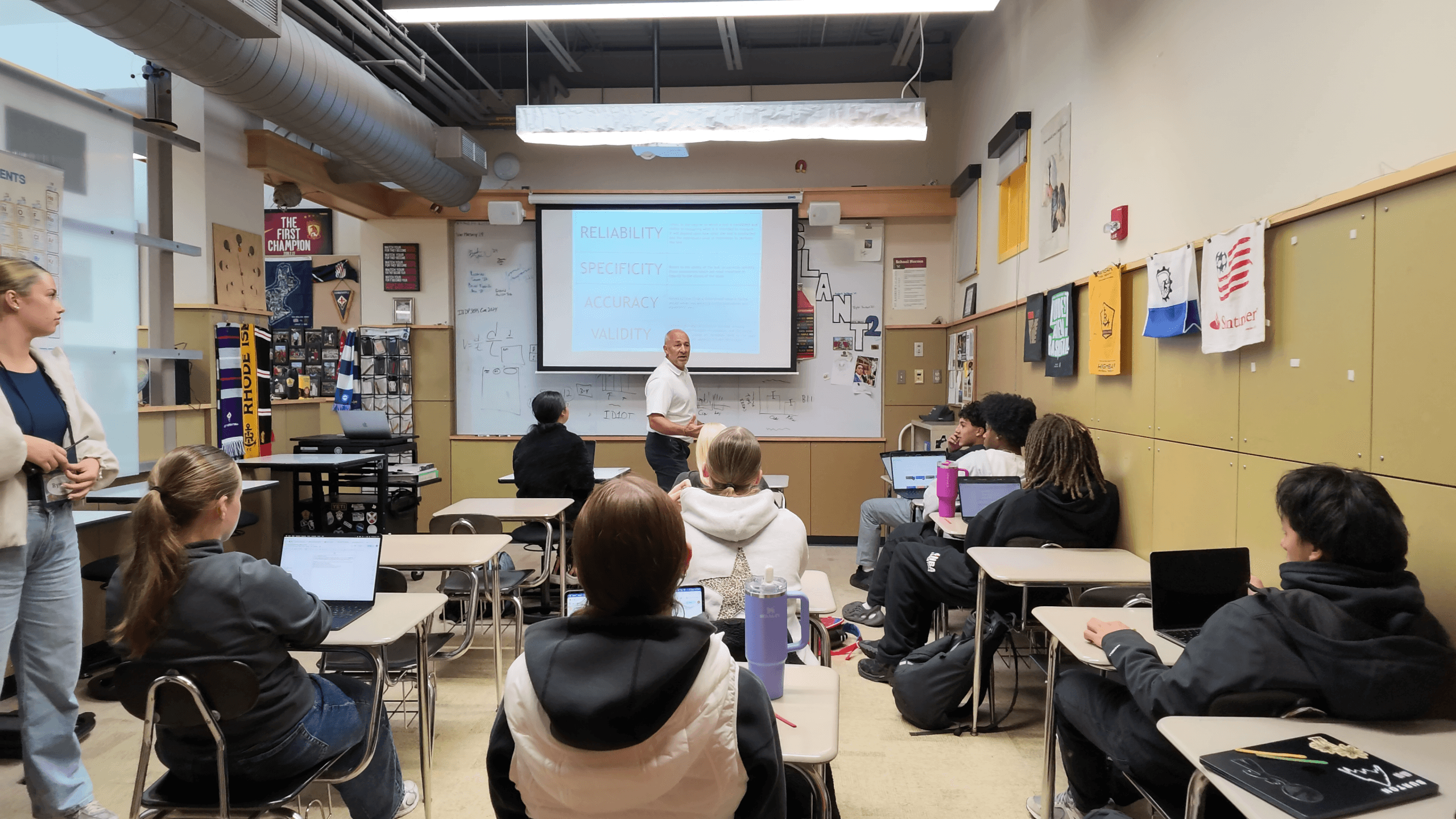
Make the Grades Readable
Report cards around the world use different scales. Some grade out of 10, some out of 20, some out of 100, some with letters or words. The passing mark sits at a different place on each, and so does a strong mark.
A reader in the United States sees the number. Without more information, they cannot tell whether it places your child near the top of the class or in the middle of it.
This has a name: a school profile. In U.S. admissions, a school profile is the short document a school sends alongside a transcript so that readers elsewhere can interpret it. U.S. high schools send one with every college application.3 Most schools outside the United States have never been asked for one, which is why it is worth asking.
What to Ask Your Child’s School For
A one-page note on the school’s letterhead, signed by someone at the school, covering:
| Include | Why the reader needs it |
|---|---|
| The grading scale, from lowest to highest | So the reader knows what the number is out of |
| The passing mark | So a mark can be placed above or below the line |
| Roughly how many students receive the top marks | So the reader can see where a strong mark sits in practice |
| The language of instruction | So the grades can be read alongside the English evidence |
| The curriculum or program (national, IB, bilingual) | So the reader knows what the courses covered |
A short note is enough. Schools that have written one before will often have it ready.
If the school cannot provide one, the national or regional grading regulations, published by the education ministry, can do part of the same job. Your consultant can help you find them.
How to Send the Grades
- Send the originals. Usually the last two school years and the current year so far. Ask each school what it needs.
- Send a translation of each report card into English. Ask each school whether the translation must be certified.
- Do not convert the grades yourself. Every school converts grades to its own scale in its own way. A GPA the family calculated is one more thing for the reader to check; the original with a key is something they can read.

03 / THE REST OF THE FILE
Make Every Other Piece Consistent
The remaining pieces of an international application are the same ones every applicant sends. What changes is how far they travel.
- Teacher recommendations. Most schools ask for two or three, usually from the English and math teachers. Many schools accept them through an online form. If a teacher writes in another language, send the original and a translation. Ask teachers early; they are writing for many students.
- The interview. International applicants usually interview by video. Treat it as seriously as an in-person visit: a quiet room, a stable connection, your child speaking for themselves.
- A graded writing sample. Some schools ask for a piece of schoolwork with the teacher’s marks on it. It is easy to miss because it does not always appear on the application checklist.
- The application itself. Many schools use a shared application, such as the Standard Application Online (SAO), plus their own questions.
- Sport, arts or other talents. If athletics is part of the plan, a coach will need video and the level of competition. See how to make a highlight video a boarding school coach will watch.
Keep the facts identical everywhere: date of birth, current grade, the grade your child would enter, and the spelling of names. A small difference between two documents costs a reader time.
04 / IN ORDER
Build the File in the Order It Will Be Read
| When | What to do |
|---|---|
| A year or more before applying | Take an English test to see where things stand |
| The spring or summer before applying | Ask your child’s school for the grading note; gather two years of report cards |
| Early in the school year you apply | Ask teachers for recommendations; arrange translations |
| Before each school’s deadline | Send the application, the report cards with the note and translations, the test score, and any writing sample |
| If sport is part of the plan | Send video and a profile to coaches before the application deadline |
Before you send anything, check:
- Does every report card have a translation and a grading note behind it?
- Is there an English score, or a date when your child will test?
- Do the date of birth, grade and name match on every document?
- Has each school confirmed what it needs, and by when?
THE GESP PERSPECTIVE
A File the Reader Can Follow
Most of what decides an international application is already true before anyone writes it down: how your child speaks, how they do in school, who they are. The work is making that visible to a reader who has never met them.

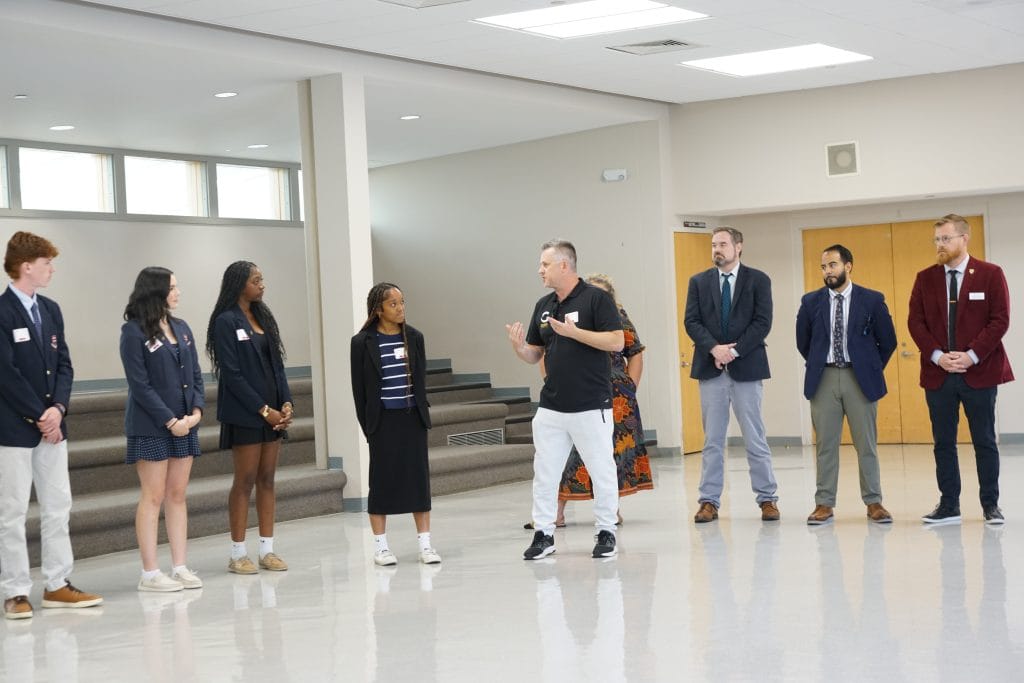
GESP consultants prepare each family’s file in the order a school reads it, and present it to each school on your list. At GESP showcases, admissions staff meet students in their own countries, often before an application arrives. Schools still make their own decisions. What changes is that the reader has met your child, and the file makes sense when it lands.
Continue reading
- How to Choose the Right U.S. Boarding School for Your Child. What to weigh before the application: academics, campus life, admission and budget.
- How to Make a Student-Athlete Highlight Video Boarding School Coaches Will Watch. If sport is part of the plan.
In short
The school has never met your child, so the file has to show what your family already knows. Send an English test score, report cards with a grading key from your child's school, and the rest of the application in the order a school reads it. Let the school convert grades to its own scale.
Frequently asked questions
No. Send the original report cards, an English translation, and a short note from your child’s school explaining its grading scale. Each boarding school converts grades to its own scale; a family’s own conversion is one more thing for the reader to check.
The grading scale from lowest to highest, the passing mark, roughly how many students receive the top marks, the language of instruction, and the curriculum. One page on school letterhead, signed, is enough. In U.S. admissions this is called a school profile.
Most accept the Duolingo English Test, the TOEFL, or both. Which test and what score a school looks for varies, so ask each school. Taking a test early tells your family where things stand while there is time to retake it.
Not always. If a teacher writes in another language, send the original with an English translation, and ask each school how it prefers to receive them.
Terms in this article
Considering U.S. boarding school?
If your family is beginning the process and would like help understanding which schools may be appropriate for your child, talk with a GESP consultant.
Talk with a GESP consultantNo Dream Is Too Big.