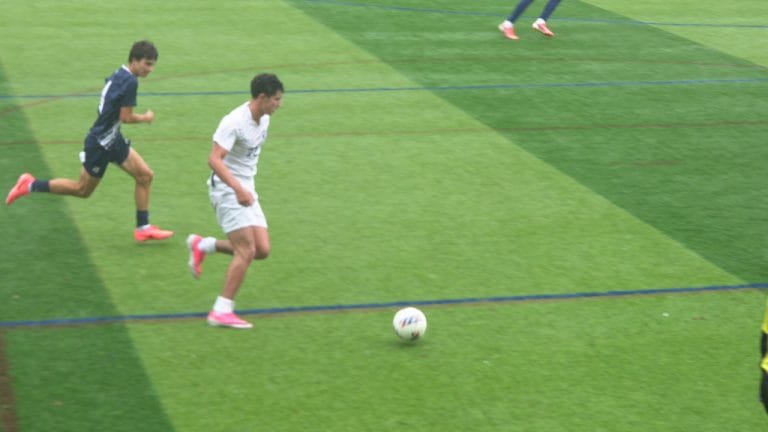

A coach at a U.S. boarding school typically decides within the first 15 to 30 seconds of a highlight video whether to keep watching. College recruiting services give families the same warning: NCSA, the recruiting service run by IMG Academy, notes that some coaches won’t watch more than the first 20 or 30 seconds of a video.1 Everything in this article follows from that.
This guide is for parents, many of them outside the United States, whose child is applying to a U.S. boarding school for grades 9 to 12 or a postgraduate year. Most advice on recruiting videos is written for college recruiting, and the two differ in ways that change what you send. The differences are set out below.
John Chiavaroli, GESP’s Vice President and Co-Owner, also directs the soccer program at The Williston Northampton School, so these videos reach him every week. He describes the highlight video as crucial, and as a different thing from a skills video, sometimes called a demo tape. The highlight video, also called a highlight reel or recruiting video, is the hook. Without one that earns the coach’s attention, a coach has little reason to open the longer skills video at all.
“Highlight videos are important hooks in the recruiting process. Coaches watch highlight videos first, before they invest the time to watch a 45-minute half or come to watch a player play.”
Every recommendation below rests on one principle: a coach’s time is limited, so make it as easy as possible for them to find everything they want to know.
BOARDING SCHOOL OR COLLEGE
How a Boarding School Recruiting Video Differs From a College One
A boarding school coach watches the same kind of video as a college coach, for a different decision. The coach can support an application; the school’s admissions and financial aid offices decide the rest. The student is younger, the footage usually comes from club or academy matches, and the timing follows the school’s admissions calendar.
| Boarding school coach | College coach | |
|---|---|---|
| The student | Usually 13 to 16, applying for grades 9 to 11, or a graduate applying for a PG year | A high school student, usually in the last two years of school |
| What the coach can do | Support the application, and say where your child would fit in the program | Offer a place on the team and, at programs that award them, an athletic scholarship |
| Who decides admission and aid | The admissions office decides admission. The financial aid office decides any aid, based on a family’s financial need at most schools | The college decides admission. Athletic scholarships exist only in Division I and II; Division III schools do not offer them2 |
| Timing | Each school’s admissions calendar: inquiries and visits in the fall, applications by January or February, decisions around March 10 | In Division I soccer, NCAA rules don’t allow coaches to call or send recruiting messages before June 15 after a student’s sophomore year of high school3 |
| Footage | Club, academy or school matches in your child’s current age group | Varsity or top club footage, ideally by the end of junior year1 |
| Length | 2 to 3 minutes | Often 3 to 5 minutes1 |
| Sent with the video | School report, English test results, and the grade your child would enter | Academic record and test scores, as each college requires |
College details are for NCAA programs. Each boarding school sets its own process, so ask each school on your list.
01 / THREE VIDEOS
Highlight Reel, Skills Video, Full Match: Know Which Video Does Which Job
Families often make one video and expect it to do everything. Coaches use three, in order.
| Video | Length | What it is for |
|---|---|---|
| Highlight video | 2 to 3 minutes | Earns the coach’s attention: your child’s strongest moments from matches, with the facts a coach needs on screen. |
| Skills video (demo tape) | Longer | Shows technique in a controlled setting, once the coach is interested. |
| Full-match footage | A whole match | Shows what a highlight cannot: positioning, decisions, work without the ball, and how your child plays when the game is going against them. |
Have all three ready by the time your child applies. The highlight video goes first; the other two are links the coach can open when they want more.
02 / THE FIRST 30 SECONDS
What to Put in the First 30 Seconds of a Recruiting Video
Start with one information slide, held long enough to read, then go straight to your child’s two or three strongest plays. Save the warm-ups and the slow introduction for another video.
The opening slide:
- Full name and date of birth
- Current grade, and the grade and year your child would enter (“Applying for grade 10, fall 2027”)
- Position, second position, and stronger foot or hand
- Current team, club and league
- Academic average, written on your school’s own scale
- Awards and honors: selections, captaincies, league or tournament awards
- Contact: a parent’s email and phone, and the name and email of your child’s current coach
Two of these lines need care for families outside the United States.
Graduation year. U.S. coaches think in graduating classes (“class of 2030”), but school years and grade names differ from country to country, and some international students repeat a year when they enter a U.S. school. The grade and year your child would enter tells the coach what they need without any arithmetic.
Grades. Most schools outside the U.S. do not calculate a GPA. Write the average the way your child’s school reports it, with its scale: “8.4 / 10” or “16 / 20”. A number with its scale answers the coach’s question; a converted number raises new ones.
03 / EASY TO FOLLOW
Make Your Athlete Easy to Find in Every Clip
- Length: 2 to 3 minutes, strongest clips first. College recruiting guides often suggest 3 to 5 minutes.1 For a boarding school coach, the highlight video only has to earn a look; the skills video and full match carry the rest.
- Markers: an arrow or spotlight on your child at the start of every clip, before the play begins.
- Sound: game sound, or quiet background music with no explicit lyrics. Some recruiting guides advise leaving music out entirely.1 Game sound is always the safer choice.
- Format: a link to an unlisted video on YouTube, Vimeo or Hudl. A link opens on a coach’s phone; a large attachment may not.
04 / LEVEL OF COMPETITION
Show the Coach the Level of Competition Your Athlete Plays Against
A goal means more when the coach knows the match it came from. Where you can, caption each clip with the opponent, the competition and the age group, and say when the stakes were high: a final, a national league match, a selection trial.
A coach in the U.S. may not know your country’s leagues. One line on the opening slide or in the profile explains it: the division your child’s team plays in, and where that sits in your country’s youth system. The same goes for awards. A regional selection or a national youth call-up carries its full weight once the coach knows what it is.
05 / WHERE IT GOES
How to Send a Highlight Video to a Boarding School Coach
At a boarding school, a coach usually first sees a student during the admissions cycle, between the fall and decisions in March. The video reaches the coach in one of a few ways: the athletic inquiry form many schools keep on their athletics page, which goes to the coach of that sport; the application, where some schools ask for athletic information; or a campus visit or interview, when coaches often meet applicants in person. Ask each school how its coaches like to receive video.
Wherever it goes, send everything together so the coach never has to ask for it:
- The highlight video link
- The skills video and one full match, as links
- A one-page profile with the same facts as the opening slide
- Your child’s most recent school report, or a line saying you can send it
- English test results, if your child has taken one
- Contact details for your child’s current coach, who has agreed to be contacted
Keep the facts identical across the slide, the profile and the application. A date of birth or a position that differs between them costs the coach time.
For families working with GESP, the videos go into the file your consultant prepares and presents to each school on your list.
06 / WHEN A COACH IS INTERESTED
When a Coach Is Interested in Your Student-Athlete
A strong video and a coach’s interest are good news. They are also where the boarding-school decision begins.
This has a name: athletic visibility. Highlight videos, showcases, recruiting profiles and messages to coaches all make your child easier for coaches to find and assess. Athletic visibility matters, and it is one part of the pathway.
At a boarding school, different people make different decisions:
| Who | What they decide |
|---|---|
| The coach | Whether they want your child in the program, and whether to support the application |
| The admissions office | Admission, based on grades, English, recommendations, the interview and the whole student |
| The financial aid office | Any aid, which at most boarding schools is based on a family’s financial need |
| Your family | Which school, if more than one says yes |
When a coach gets in touch, ask:
- What would you like to see next: the skills video, a full match, a call with my child?
- What does admissions need from us, and by when?
- Where would my child fit in your program in their first year?
- What do players in your program do when the season ends?
Then ask one question as a family: would this school still be right for your child if their sport were taken out of the picture? Academics, English support, dorm life and cost decide most of what your child’s days will feel like.
THE GESP PERSPECTIVE
Where the Video Stops
A video gets a coach to look. At a GESP showcase, coaches and admissions staff from U.S. boarding schools watch students play in person, in the students’ own country, and then meet their families to talk about academics, daily life and cost.
The people who advise GESP families include coaches who receive these videos, former admissions staff who read the applications that follow, and a consultant who played college soccer. Jonty Loukes coached soccer at The Kiski School and worked in its admissions office; John Chiavaroli directs soccer at Williston Northampton; Heidi Nydam played four seasons of varsity soccer at Bates College, an NCAA Division III program, and was named to her conference’s All-Academic team three times. They watch a video the way a coach does, then look at the transcript, the English and the family’s budget the way a school will, before any school goes on your list.
Continue reading
- How to Choose the Right U.S. Boarding School for Your Child. What to weigh alongside athletics: academics, campus life, admission and budget.
In short
Make it a 2 to 3 minute hook: an opening slide with everything a coach needs, your child's strongest plays first, clear markers and the level of competition on screen. It earns a look at the skills video and a conversation. Admission, aid and fit are decided separately.
Frequently asked questions
Two to three minutes. Coaches typically decide within the first 15 to 30 seconds whether to keep watching, so open with an information slide and your child’s two or three strongest plays.
The highlight video is the hook: a short reel of match moments that earns the coach’s attention. The skills video, sometimes called a demo tape, is longer and shows technique in a controlled setting. Coaches open it once the highlight video has made them interested.
Write the average the way your child’s school reports it, with its scale, for example 8.4 / 10 or 16 / 20. A number with its scale is clearer to a coach than a converted GPA.
The coach decides whether they want your child in the program and whether to support the application. The admissions office decides admission, and the financial aid office decides any aid.
Yes. Families and coaches use all three names for the same thing: a 2 to 3 minute cut of a student-athlete’s strongest match moments, with the facts a coach needs on screen. The skills video and full-match footage are separate, longer videos the coach opens once the highlight video has their attention.
Sources
Terms in this article
Considering U.S. boarding school?
If your family is beginning the process and would like help understanding which schools may be appropriate for your child, talk with a GESP consultant.
Talk with a GESP consultantNo Dream Is Too Big.